
What to say
How to deal with a coworker who undermines you: what to say
The short answer: name the move, calmly, at the moment it happens, and keep the decision where it belongs. "I'd like to finish the point, then let's look at the risk together." You don't need to prove they meant it. You need the room to see your work clearly, and your manager to hear it from you first.
First, a quick check: undermining, or just disagreement?
A coworker who argues with you is not always undermining you. Disagreement is part of good work. Ask yourself three questions.
- Is it about the work, or about you? "This date looks tight" is about the work. "Are you sure you've done this before?" in front of the client is about you.
- Does it happen in front of people who matter? A doubt raised with you first is feedback. The same doubt raised first with your boss, or in the big meeting, is a different move.
- Is it a pattern? Once is a bad day. Your ideas shot down, your work quietly redone, your name left off the email, again and again, is a pattern.
If it is a pattern, use the lines below. They share one move: you say what just happened, in plain words, and you put the next step back in your hands.
Try it first: what would you say?
He cut in before you finished
“Sorry, but this won't work. We tried something like it last year.”
Tom, halfway through your proposal, in front of Maria and the team. It is the third time this month.

Say this, in the moment
-
When they shoot down your idea before you finish
"Let me finish the point, then I'd really like to hear the risk you see."
You are not refusing the criticism. You are setting the order: your idea first, their doubt second.
-
When they question your competence in front of others
"Fair question. I've done three of these this year. Here's how I'm handling the risk."
Answer the question as if it were honest. One fact, then the plan. Don't defend yourself at length; it makes the doubt look bigger.
-
When they go over your head to your boss
"I heard you raised the timeline with Maria. Next time, come to me first. I can usually fix it faster."
Say it privately, the same day. You are not asking them to stop talking to the boss. You are asking for the first call.
-
When they redo or change your work without telling you
"I saw the slides changed after I sent them. Walk me through what you changed and why? Then we'll agree one version."
Ask to understand before you object. If their change was good, you learn something. If it wasn't, the question makes that clear.
-
When you're left off the email or the meeting
"I think I got missed on the invite for Thursday. The data is mine, so I'll join. Can you add me?"
Assume it was a slip, out loud. It costs nothing, and it makes the next omission harder to explain.
-
When they say "I'm just playing devil's advocate"
"Useful. What would make you comfortable with it?"
Turn the objection into a condition you can meet. Someone who only wants to block will struggle to name one.
Afterwards, one to one
If it keeps happening, ask for ten minutes. Name one recent example, not their character.
"In Tuesday's meeting you said my plan wasn't ready before I'd finished presenting it. It made it harder for me to get the team on board. If you see a problem with my work, I'd rather hear it from you first."
If they had a real concern:
"Thanks, that's a fair point. Let's agree you'll flag things like that to me before the meeting, and I'll send you the draft a day earlier."
If they brush it off:
"Okay. I'll keep sending you drafts early, so any concern can come to me before it goes to the group."
That last line removes their excuse. If the public doubts keep coming after private chances, the pattern is now easy for anyone to see.
Depending on who it is
-
A peer competing for the same role
"We'll both look better if this project lands. Can we split it so each of us owns a clear part?"
Clear ownership gives fewer chances to step on your work, and makes it plain whose work is whose.
-
Someone senior to you
"I want to get this right. Could you tell me what you'd need to see before you'd back it?"
You can't tell a senior colleague to stop. You can ask them to state their bar, then meet it in writing.
-
Someone who reports to you
"When you question my decision in front of the team, it splits the team. Bring it to me first, and I'll listen. If I'm wrong, I'll say so in front of them."
Make the private route genuinely open, and keep your promise to change your mind in public when they are right.
The line people usually say, and a better one
- "Why are you always undermining me?" It's an accusation they can deny, and now the meeting is about your feelings, not your work. Try: "Let me finish the point, then I'd like to hear the risk."
- Undermining them back. The team stops seeing who started it. They only see two people fighting.
- Going quiet in meetings. It feels safe, but it hands them the floor. Try: say your idea first, and send it in writing before the meeting.
- Complaining to everyone but them. It travels, and it makes you look like the problem.
If it keeps happening: telling your manager
Go to your manager about the work, not the person. Show how the pattern affects a result they care about.
"I'd like your help with something. Three times this month, decisions on my project were reopened with you before they came to me. It's slowing the launch. Could we agree that questions on my work come to me first?"
Keep a short record of each time it happens: the date, what happened, who saw it, and what it cost the work. For example:
"14 Nov. My budget estimate reopened with Maria by Tom, not raised with me. Two days lost redoing a number that didn't change."
A record like this shows a pattern without you guessing at anyone's motive. If it turns into false claims about you, or starts to affect your review, HR is the next step. Your notes go with you.
Published
Practise it in SNAXE
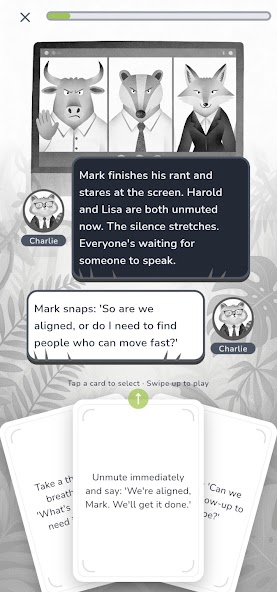
Reading the words is easy. Saying them in the moment is harder.
SNAXE puts you in short workplace scenes. You pick what to say, then see what works. Five minutes a day.