
What to say
What to say to a coworker who acts like your boss
The short answer: thank them, then send the decision back to the person who actually makes it. "Thanks. I'll check that against what Mark asked for." You don't need to win an argument about who is in charge. You only need your priorities to come from one place.
Which version are you dealing with?
- They hand out work. "Can you take this too?" in chat, as if you reported to them.
- They speak for the boss. "Mark wants this by Thursday." You never heard Mark say it.
- They correct you in front of others. Your meeting, their running commentary.
- They check on your work. "Where are we on this?" from someone who isn't your manager.
Each one has its own line below. They share one move: be friendly, and point to who decides.
Try it first: what would you say?
A deadline from someone who isn’t your boss
“Mark wants the risk slides by Thursday, so can you get them to me first?”
Lisa, in the team chat. She isn’t your manager, and you never heard Mark say it.

Say this, in the moment
-
When they give you a task
"I can look at it. It would push back the report, so I'll check with Mark which comes first."
You don't refuse, and you don't quietly absorb it. You name the trade-off, and the person who set your priorities makes the call.
-
When they speak for the boss
"Good to know. I'll confirm the details with Mark, so I get it right."
No accusation. It simply takes the go-between out of the loop.
-
When they correct you in a meeting
"Thanks, I've got this part. Happy to go through it with you afterwards."
You keep the floor and offer a private channel. Most people take the hint.
-
When they check on your work
"It's on track for Thursday. Mark has the latest."
Short, true, and it says where updates go.
-
If they push back: "I'm only trying to help"
"I know, and I appreciate it. I just need one list of priorities, and that comes from Mark."
Accept the good intent, keep the boundary. Both can be true.
Afterwards, one to one
If it happens more than once, ask a real question rather than make an accusation. You might have missed a change.
"I've noticed you've been giving me parts of the Q4 work. I want to make sure I haven't missed something. Did Mark ask you to coordinate this?"
If the answer is yes:
"Great. Then let's agree how requests reach me: one list, and Mark sees it."
If the answer is no:
"Then I'll keep taking my priorities from Mark. I'm glad to help when I have room. Just ask me, rather than assign it."
Depending on who it is
-
A peer at your level
"Happy to help where I can. I'll run it past Mark first, since it changes my week."
-
Someone senior, or who has been there longer
"I value your experience on this. For priorities I'm working from Mark's list, so I'll check with him."
Respect the experience without handing over the authority.
-
A project lead who may really have the authority
"What's yours to decide on this project, and what should still go through Mark?"
Sometimes they do have a remit and nobody told you. Ask once, and you'll know which requests to treat as real.
-
In chat
"Can do it by Friday if the risk review moves to Monday. Which do you prefer? I'll copy Mark so we're all aligned."
In writing, a trade-off and a copy to your manager do the work a tone of voice would do in person.
The line people usually say, and a better one
- "You're not my boss." True, and it starts a fight about status. Try: "I'll check that with Mark." Same message, no fight.
- A silent yes, then doing it at 9 p.m. It teaches them it works. Try: "I can, if the report moves. Which matters more?"
- "Yes, boss." Sarcasm lands as hostility, and you look like the problem. Try: "Noted. Is this coming from Mark?"
- Complaining to everyone except them. It travels, and it never reaches the person who could change it.
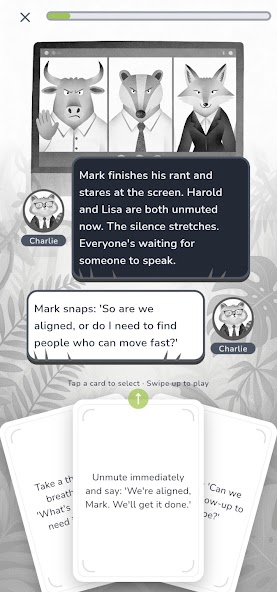
A scene from the SNAXE app
In SNAXE, Lisa is the coworker who sounds like a manager. Two of her lines, word for word from the app:
"Could you have something by tomorrow? I'm meeting a stakeholder Friday, and it would really help me represent the team well."
"Also, I told Mark we'd add a competitor deep dive. Tiny thing. You can bolt it on, right?"
Friendly packaging, no criteria, and a deadline that moves. In the app you practise the reply in that moment: a yes with a condition, a fair trade, and one question that pins down what "done" means.
If it keeps happening: telling your manager
Bring your manager a question about priorities, not a complaint about a person.
"Can I get your view on something? Lisa has asked me for three pieces of Q4 work this week. I want to make sure I'm working on your priorities. Should requests from her come through you?"
Keep a short note of each request: the date, where it came from, what was asked, and what you did. For example:
"16 Nov, chat. Asked me to take the risk slide and a competitor deep dive, said Mark had agreed. Checked with Mark on 17 Nov: he hadn't."
Facts like these turn "she's bossy" into a workflow problem your manager can fix. If the behaviour turns into intimidation, or starts to affect your review, HR is the next step. Your notes go with you.
Published
Practise it in SNAXE
Reading the words is easy. Saying them in the moment is harder.
SNAXE puts you in short workplace scenes. You pick what to say, then see what works. Five minutes a day.